
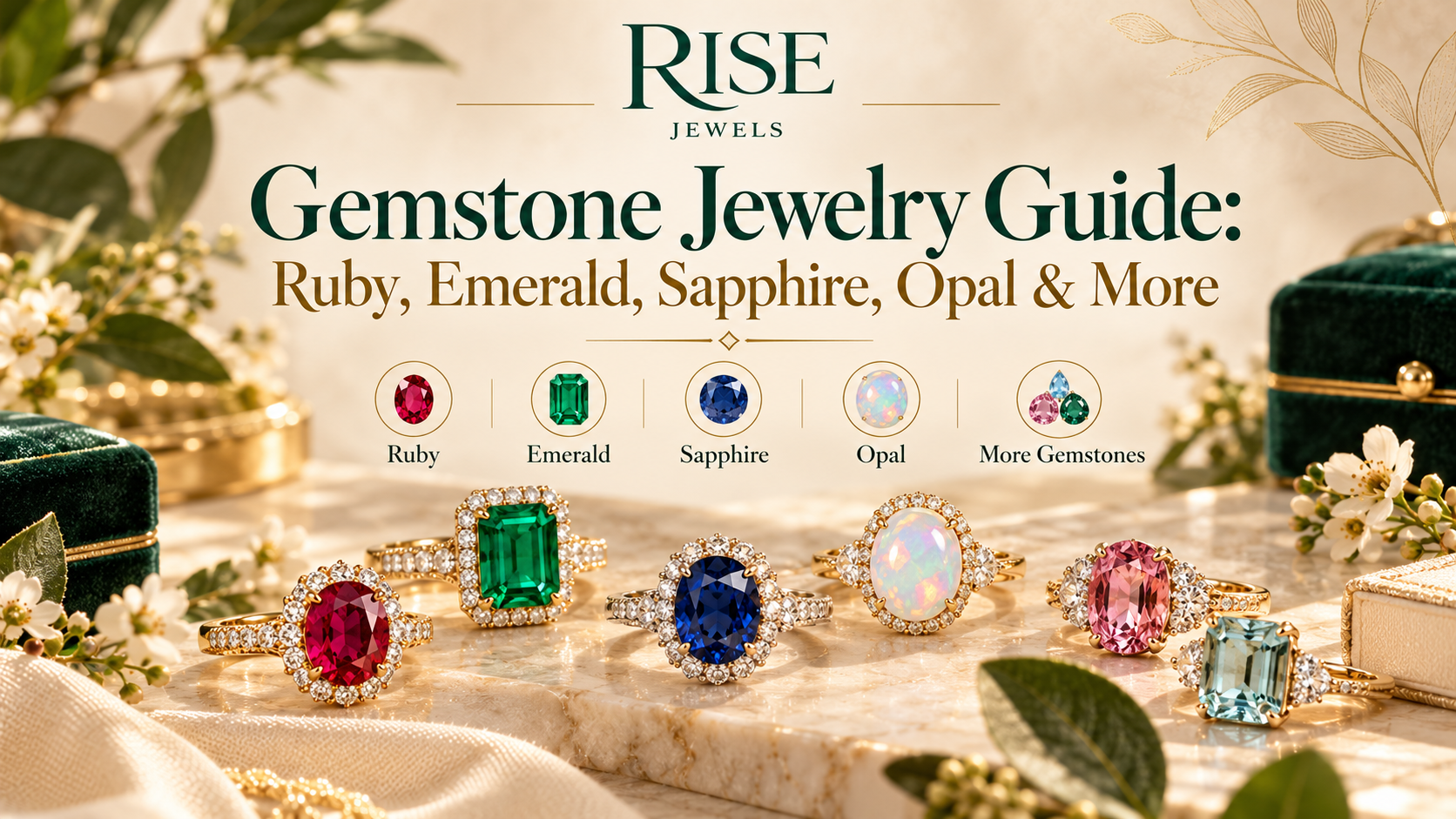
Explore the world of gemstone jewelry with this complete guide to ruby, emerald, sapphire, opal, tourmaline, and more. Learn about natural and lab-created gemstones, popular ring styles, gemstone durability, jewelry care, and how to choose meaningful gemstone pieces at RiseJewels.
From the deep red of ruby to the captivating green of emerald, gemstone jewelry brings color, personality, and timeless appeal to any collection. Whether you are searching for a meaningful birthday gift, a unique engagement ring, or an elegant everyday accessory, gemstones offer endless possibilities.
Today, shoppers can explore natural gemstone jewelry, lab-created gemstones, handmade gemstone rings, and artisan-inspired pieces in a remarkable variety of styles. Understanding the differences between stones can help you make a more confident purchase.
At RiseJewels, you can discover distinctive jewelry designs from independent sellers, including ruby rings, emerald jewelry, sapphire rings, opal pieces, and other colorful gemstone creations.
This guide explores the most popular gemstones, their characteristics, jewelry styles, practical care requirements, and important buying considerations.
What Is Gemstone Jewelry?
Gemstone jewelry is jewelry featuring natural, laboratory-created, or other clearly identified gem materials used for their color, beauty, rarity, or optical characteristics. Gemstones may appear in rings, necklaces, bracelets, earrings, and bridal jewelry.
Gemstone jewelry includes familiar precious stones such as ruby, sapphire, and emerald, along with popular choices like opal, tourmaline, aquamarine, moonstone, and tanzanite.
Some gemstones are mined from the earth, while laboratory-created varieties are produced in controlled environments. Both can be used in beautiful jewelry, but their origins and characteristics should be accurately disclosed.
Natural Gemstone Jewelry vs Lab-Created Gemstones
One of the most important decisions when buying gemstone jewelry online is understanding gemstone origin.
Natural Gemstones
Natural gemstones form through geological processes in the earth. Their colors, internal characteristics, rarity, and treatments can influence their market value.
Natural ruby, sapphire, emerald, and many other gemstones may undergo treatments to improve appearance or stability. Natural does not automatically mean untreated.
Lab-Created Gemstones
Laboratory-created gemstones are produced using controlled processes rather than being mined. Properly identified lab-created ruby or sapphire has essentially the same chemical composition and crystal structure as its natural counterpart.
Lab-created gemstones are often more accessible in price, although actual costs depend on quality and jewelry construction.
Simulated gemstones are different: a simulant may resemble another gemstone without sharing its composition.
Before purchasing natural gemstone jewelry or lab-created jewelry, always review the gemstone identity, origin, treatment disclosures, and product specifications.
Ruby Jewelry: Timeless Red Gemstone Elegance
Ruby jewelry is admired for its rich red color and classic association with love and celebration.
Ruby is the red variety of corundum, the same mineral family as sapphire. With a Mohs hardness of 9, ruby offers excellent scratch resistance and is often chosen for rings intended for frequent wear.
Popular Ruby Jewelry Styles
- Ruby engagement rings with solitaire or halo settings.
- Vintage-inspired ruby rings with decorative accents.
- Ruby necklaces for anniversaries and meaningful gifts.
- Ruby earrings for elegant evening styling.
- Minimalist ruby jewelry for a subtle touch of color.
Ruby is also the traditional July birthstone, making ruby rings and pendants thoughtful birthday gift options.
Explore a cushion-cut ruby engagement ring design at RiseJewels. This listing identifies its primary ruby as lab-created, so review the chosen metal variant and accent-stone details before ordering.
Emerald Jewelry: Classic Green Gemstone Designs
Emerald jewelry is celebrated for its beautiful green shades, ranging from soft green to intense, saturated tones.
Emerald belongs to the beryl mineral family. Its color and distinctive internal characteristics make it a favorite for vintage-inspired jewelry and unique gemstone engagement rings.
Why Choose Emerald Rings?
Emerald rings offer a memorable alternative to conventional colorless engagement stones. Emerald-cut settings, floral designs, and Art Deco-inspired jewelry can emphasize the gemstone's sophisticated appearance.
Although emerald has a Mohs hardness of approximately 7.5 to 8, internal fractures can make some stones vulnerable to impact.
Protective settings and careful handling are especially important for emerald jewelry.
For inspiration, explore this green emerald-cut gemstone ring, which combines a geometric center stone with blue accent stones. The listing identifies the primary emerald as lab-created.
Emerald is traditionally associated with May birthdays and is a popular choice for meaningful anniversary jewelry.
Sapphire Jewelry: Beyond Classic Blue Gemstones
Sapphire jewelry is known for its color variety, durability, and elegant appearance.
Although blue sapphire is the most familiar variety, sapphires can also be pink, yellow, green, purple, and other colors.
Like ruby, sapphire is corundum and has a Mohs hardness of 9. This makes sapphire rings a popular choice for engagement rings, wedding bands, and frequently worn jewelry.
Popular Sapphire Ring Styles
- Blue sapphire rings: Classic designs with deep blue gemstones.
- Pink sapphire rings: Romantic alternatives to traditional engagement jewelry.
- Sapphire wedding bands: Delicate gemstone accents for bridal styling.
- Vintage sapphire jewelry: Decorative settings with distinctive historical influences.
Explore a blue sapphire wedding band with nature-inspired detailing or discover this pink sapphire ring design.
Check the stone origin, treatments, selected metal, and other listing details before purchase.
Sapphire is also the traditional September birthstone.
Opal Jewelry: Colorful and Artistic Gemstone Beauty
Opal jewelry is admired for its distinctive flashes of color, known as play-of-color. Depending on the stone, these effects may include combinations of green, blue, orange, red, and other colors.
Opals can create striking jewelry designs, from dramatic statement rings to delicate minimalist pieces.
Popular Opal Ring Designs
- Oval opal rings for romantic jewelry styling.
- Baguette-cut opal rings for minimalist collections.
- Vintage-inspired opal engagement ring designs.
- Opal stacking rings for subtle color accents.
- Opal jewelry gifts for October birthdays.
Opal typically has a Mohs hardness of approximately 5 to 6.5, making it more vulnerable to scratching and damage than ruby or sapphire.
Consider protective settings and avoid exposing opal jewelry to significant impacts or sudden temperature changes.
Discover a dainty baguette-cut opal ring at RiseJewels for inspiration.
More Unique Gemstones Worth Exploring
Beyond ruby, emerald, sapphire, and opal, there are many other gemstones that appeal to collectors and jewelry lovers.
Tourmaline Jewelry
Tourmaline jewelry offers an impressive variety of colors, including pink, green, and multicolored varieties such as watermelon tourmaline.
Tourmaline is a popular choice for colorful statement rings and contemporary artisan jewelry. Buyers should consider the stone's setting and care requirements when choosing a ring for frequent wear.
Aquamarine Jewelry
Aquamarine is a blue to blue-green variety of beryl, the same mineral family as emerald. Its gentle color makes it an attractive choice for elegant rings, necklaces, and bridal jewelry.
Aquamarine is also the traditional March birthstone.
Tanzanite Jewelry
Tanzanite is admired for its blue-violet appearance and is associated with special-occasion jewelry.
Because it requires more careful handling than ruby or sapphire, tanzanite jewelry is often better suited to thoughtful wear and protective settings.
Moonstone Jewelry
Moonstone jewelry is valued for its soft glowing optical effect, called adularescence.
Moonstone can complement minimalist and nature-inspired jewelry designs, but it should be protected from scratches and hard impacts.
Explore this moonstone ring design at RiseJewels for inspiration.
How to Choose the Right Gemstone Jewelry
Selecting the perfect gemstone piece involves balancing personal style, budget, materials, and practical needs.
1. Choose a Gemstone Color You Love
Color is often the first feature shoppers notice. Red ruby can create a bold look, green emerald offers a distinctive appearance, and blue sapphire complements many classic settings.
Rather than choosing a gemstone solely because it is popular, consider how its color complements your existing jewelry and wardrobe.
2. Consider Gemstone Durability
For frequently worn gemstone rings, durability matters. Ruby and sapphire offer strong scratch resistance, while delicate gemstones such as opal may be better suited to occasional wear.
Hardness is not the same as toughness. Even a hard gemstone can chip if struck.
3. Check the Metal
Popular jewelry materials include sterling silver, 14K gold, 18K gold, platinum, and various plated metals.
Always confirm whether the selected product variant is solid gold, sterling silver, gold-filled, or gold-plated. These materials have different prices and maintenance requirements.
4. Review the Gemstone Origin
Look for clear descriptions stating whether a gemstone is natural, lab-created, treated, or simulated.
For higher-value purchases, consider whether an independent gemstone identification report is available.
5. Check Ring Size and Seller Policies
When buying gemstone rings online, verify the US ring size and compare international measurements carefully.
Review processing times, shipping eligibility, returns, and customization options before making a purchase.
Gemstone Jewelry Gifts for Special Occasions
Gemstone jewelry gifts can be thoughtful choices for birthdays, anniversaries, weddings, graduations, and other important occasions.
- Birthday gifts: Consider a birthstone-inspired pendant or ring.
- Anniversary gifts: Choose jewelry in a meaningful color or personal style.
- Engagement jewelry: Explore ruby, sapphire, or other gemstone engagement ring designs.
- Wedding jewelry: Consider gemstone earrings or coordinating wedding bands.
- Personalized gifts: Look for sellers offering engraving or custom design choices.
For more inspiration on artisan styles and shopping considerations, read our complete handmade jewelry buying guide.
Gemstone Jewelry from India: Artisan Designs and Craftsmanship
India has a long history of gemstone cutting, jewelry making, and decorative metalwork.
Shoppers interested in gemstone jewelry India may find designs from independent Indian makers featuring colorful stones, detailed settings, and contemporary or traditional influences.
However, jewelry made in India does not necessarily contain gemstones mined in India. Manufacturing location and gemstone geographic origin are separate details.
RiseJewels features independent jewelry sellers, including makers based in India. Always check the individual seller and listing for verified material and origin information.
How to Care for Gemstone Jewelry
Different gemstones require different cleaning and storage methods. There is no single cleaning process suitable for every piece.
- Store gemstone jewelry separately to reduce scratching.
- Remove jewelry before sports, heavy work, or exposure to harsh cleaning chemicals.
- Use a soft cloth and follow instructions appropriate for the stone and setting.
- Avoid ultrasonic or steam cleaning unless the jewelry is confirmed suitable.
- Protect delicate gemstones from impact and sudden temperature changes.
- Have loose settings or damaged prongs checked by a qualified jeweler.
For additional technical information about gemstone properties and care, consult the Gemological Institute of America (GIA).
Frequently Asked Questions About Gemstone Jewelry
What is the best gemstone for everyday jewelry?
Ruby and sapphire are popular choices for frequently worn jewelry because of their hardness and toughness. The best option still depends on the setting and how the jewelry is worn.
Is natural gemstone jewelry better than lab-created jewelry?
Neither is universally better. Natural gemstones appeal to buyers who value geological origin and rarity, while lab-created gemstones can provide attractive options at different prices. Accurate identification is essential.
Which gemstone is best for an engagement ring?
Sapphire and ruby are popular durable choices. Emerald and opal can also be used in engagement rings, but they generally require additional care and suitable settings.
Are gemstone rings suitable for gifts?
Yes. Gemstone rings are popular gifts for birthdays, anniversaries, engagements, and special milestones. Consider the recipient's style and ring size.
Where can I buy gemstone jewelry online?
You can explore gemstone jewelry through independent jewelers, specialist retailers, and marketplaces such as RiseJewels. Compare gemstone disclosures, seller details, materials, shipping, and return policies.
What makes handmade gemstone jewelry special?
Handmade gemstone jewelry can feature distinctive designs, creative gemstone combinations, detailed craftsmanship, and personalization options. Individual quality depends on the maker and materials.
Explore Unique Gemstone Jewelry at RiseJewels
From elegant ruby rings and colorful sapphire bands to green emerald designs and delicate opal jewelry, gemstones offer many ways to celebrate personal style.
Understanding gemstone origin, durability, quality, and care can help you choose jewelry that remains meaningful for years.
Discover artisan-inspired designs from independent sellers at RiseJewels.
Start exploring: Browse gemstone jewelry and unique designs or explore gemstone rings at RiseJewels.
More from the blog
Shop handmade jewelry
Browse rings, necklaces, earrings, and gemstones from independent makers.
Explore jewelry